
Let me get this out of the way: I loved the new Odyssey movie. I thought it was incredible how much plot the whole team managed to squeeze into a runtime of just under three hours, and I left the theater thinking that this was a very focused and coherent imagining of Homer’s epic.
Then I got on the internet and saw that this film has made both far left and far right audiences incredibly angry. This, to me, makes the film worth defending, insofar as a film with 94% on Rotten Tomatoes (as of the time of writing) needs defense.
On some of the meta topics, I have but a few words: If you hated the casting, go watch a play. If you hated that ‘Nolan did the female characters dirty’ because he’s a man telling women’s stories, then know that Emma Thomas (Producer), Jennifer Lame (Editor), Ruth De Jong (Production Designer), and Ellen Mirojnik (Costume Designer) were just as crucial to the making and shaping of this film as the director. As for the Odyssey’s four-day filming in Western Sahara, the last colony in Africa, yeah. He shouldn’t have done that. But, hopefully all the press coverage from this controversy will focus public attention on Morocco’s human rights abuses in the area and lead to a just resolution.
But that’s not what I want to bite into.
I move in circles where everyone is frothing at the mouth at the removal of the Nobody scene. I am convinced that people who are mad about this don’t understand filmmaking or storytelling, which is why I’m going to use both of these to explain why removing ‘Nobody’ was a great idea.
What does the ‘Nobody’ scene do? In the poem, Odysseus tricks the cyclops into believing his name is ‘Nobody’. This prevents Polyphemus from getting help from his friends: when Polyphemus is blinded, he yells out, “Nobody has hurt me” and all his friends are like, “Huh, weird. Sure thing, nobody’s hurting you, I’m going back to sleep”. In the original story, this part establishes Odysseus’ cleverness, introduces the hubris that dooms his voyage, and it’s funny.
The ‘Nobody’ scene is not necessary in Nolan’s film, because he’s already established what the original was designed to do.
We already know that Odysseus is clever. In the movie, he devises the plan for the Trojan horse, and he comes up with the plan to tie sticks to his men’s backs to fool a blinded Polyphemus into thinking that they’re his sheep.
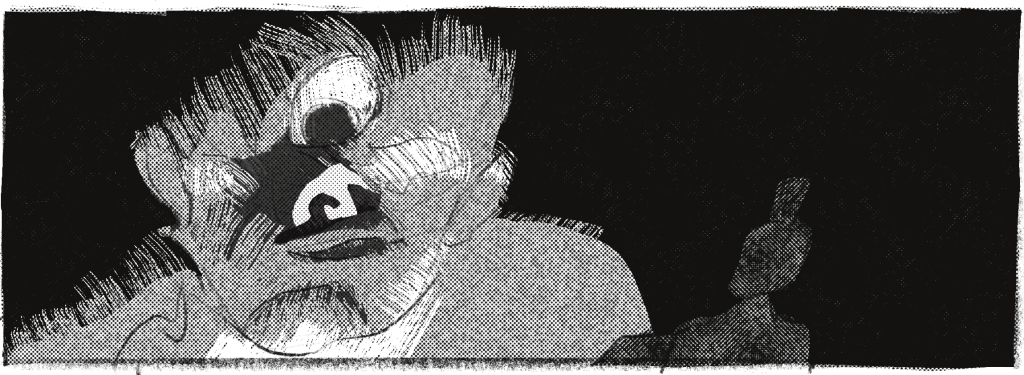
We get the hubris too. Near the end of the cyclops sequence, Odysseus shoots a blinded Polyphemus in the eye after he and his men have already escaped the cyclops’ cave and the monster is already blinded. Polyphemus realizes they’ve escaped and chases them down the mountainside, calling for Poseidon’s help and dooming Odysseus’ voyage. I really enjoy this addition, because we see Odysseus using his bow without twanging it—Nolan sustains our focus on Odysseus’ bow (and the ethics of being a hunter vs a fighter) with changes like these.
One thing that Nolan’s adaptation doesn’t capture is the Nobody scene’s humor. But then again, that is literally not the kind of story that Nolan is trying to tell, particularly during the cyclops sequence. Here, he is trying to capture terror, powerlessness, and doom.
Some of you may still be mad. Whatever. Let’s look now from the filmmaker’s angle:
What would having a Nobody Scene in this movie actually involve? The reason the original ‘Nobody’ works is because when Polyphemus gets blinded, he yells out for his friends to help him. For Nolan to have recreated this for the movie, he would have had to spend more money, more screentime, and sacrificed the scene’s mood to establish three things:
- shown that there were multiple cyclopes on the island
- shown Odysseus realizing that there were other cyclopes that Polyphemus would call on in an emergency
- establish Polyphemus as a yapper, willing and able to converse to humans
That’s a lot of filmmaking work to do just to include this single line of dialogue. But let’s tease it out…
Multiple Cyclopes
Nolan would have had to introduce the fact that this island has multiple giants, which would have massively bloated the giant puppet budget. Additionally, having just one cyclops enhances the fear Nolan is building. One scary thing is scary. But if you add in multiple scary things, the situation generally becomes less frightening. One monster is unique, but having several implies that some are disposable and therefore defeatable.
Odysseus would also have had to figure out that there were other cyclopes while still inside the cave. But the film makes it clear that he’s got other things on his mind at that point. To add in more would be to confuse the audience—just to keep in a line for fanservice. No!!!
Polyphemus talking
A big part of the movie is the asymmetrical hunter/prey dynamic and the guest/host dynamic. Odysseus twangs his bow to give his prey warning because it’s fair. What makes the cyclops scene gel so well with the rest of the movie is that now Odysseus and his men are the ones being hunted unfairly by a higher being that has no interest in communicating with them.
Polyphemus was not playing by ‘Zeus’ Law’. He did not treat Matt Damon and the others as guests, he did not share his delectable cave-cheese with them. Instead, he eats people and it’s super freaky! This fits so well with the storyline of Odysseus coping with what he did to Troy. The Greeks violated the laws of hospitality. The sacking of Troy wasn’t a fair fight, it was an ambush that went too far and became a massacre. In the cyclops episode, like with the Laestrygonians, Odysseus is experiencing the same horror and powerlessness that his men inflicted upon the Trojans—they thought they were safe, and then they were slaughtered by beings who they could not bargain with.
The parallels simply would not work if Polyphemus and Odysseus could chit chat and have their whole Nobody conversation. It would add an element of bargaining that the prey does not have with the predator, that the Trojans did not have with the Greeks. If Polyphemus was willing to converse with Odysseus, that would highlight a functional host/guest dynamic, not the breakdown of hospitality that is the core of Nolan’s film.
But here’s the kicker. Yes, Odysseus doesn’t have a chance to pretend to be ‘Nobody’. But, he is so powerless in this scene that the audience can feel that he is nobody. He’s literally an ant in Polyphemus’ kitchen. A fleck of protein. Insignificant. It’s a nice reference to the scene that Nolan cut, and I like to think it’s intentional.
I like that Nolan removed the Nobody scene. I think it takes guts to omit the most well-known part of one of the world’s most well-known stories. To look at something so beloved and cut it because it doesn’t serve the arc or the medium, that’s good filmmaking.